Meta advertising · Client case study
Launching the Franck Muller Vanguard Barbie™.
A precision paid-media launch strategy for a limited edition of 150 pieces worldwide.
· Oskar
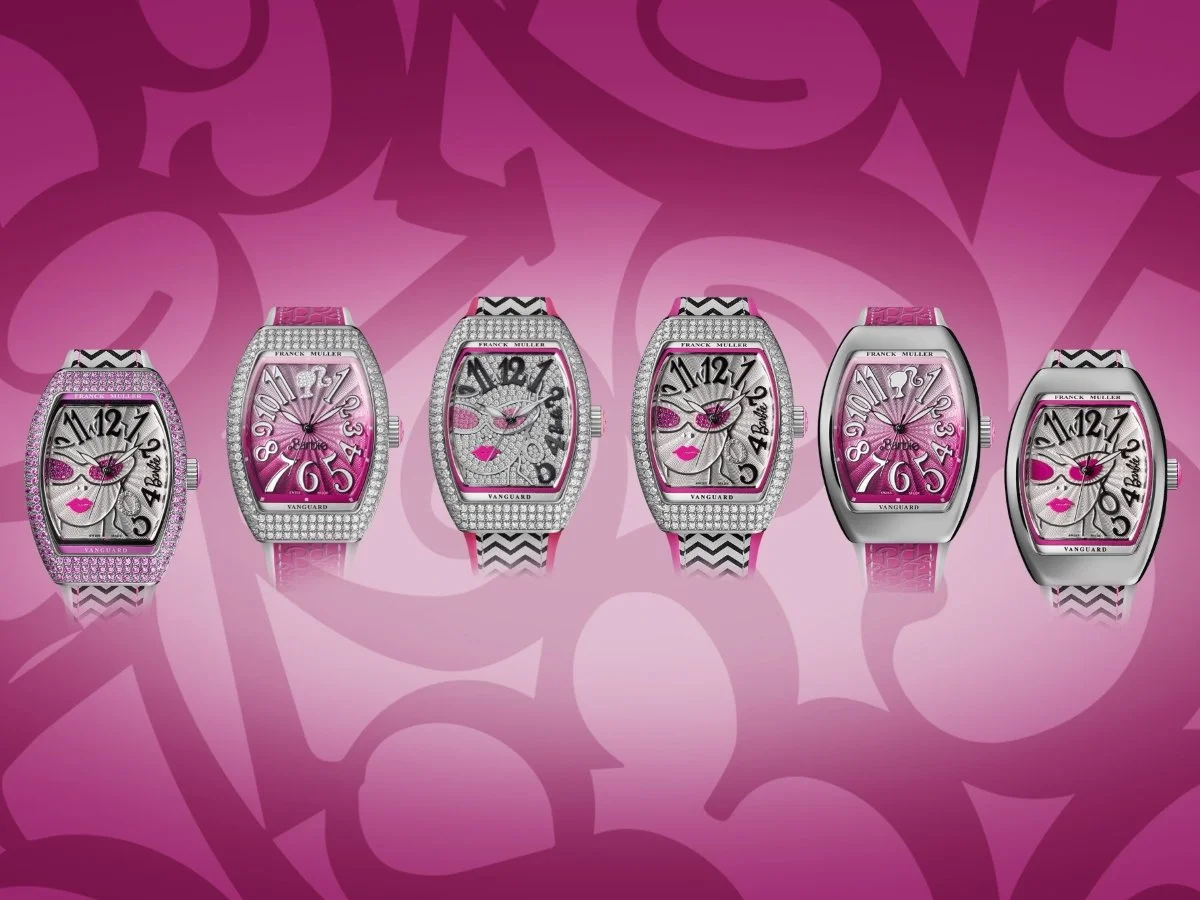
ODIA built the paid-media launch strategy for the Vanguard Barbie™, Franck Muller’s first official brand collaboration: a limited run of 150 pieces, with a luxury gift buyer who rarely thinks of himself as a Barbie customer.
At a glance
The project in brief.
- Client
- Franck Muller, Geneva
- Product
- Vanguard Barbie™, limited to 150 pieces worldwide
- Our role
- Launch and paid-media strategy, tracking, landing page, creative direction
- Channels
- Meta Ads, Google Search + Shopping, email, retargeting
- Audiences
- Two ideal customer profiles, each with its own creatives and message
- Timeline
- 2 weeks pre-launch, launch day, 4 weeks post-launch
Starting point
The challenge.
Barbie has enormous global reach. But a 150-piece Haute Horlogerie watch cannot be advertised to everyone. The realistic buyer pool is tiny, and the launch needed precision rather than reach alone.
- A first for the house: The Vanguard Barbie™ is Franck Muller’s first official collaboration, with no existing playbook or past audience data to lean on.
- The buyer isn’t the wearer: Many pieces would be bought as gifts, by people who would never search for a Barbie product.
- No digital foundation: Tracking, ad accounts and the purchase flow all had to be built from scratch before a single ad could run.
The audience
Two buyers. Two different messages.
Primary audience
The Luxury Gift Buyer
“She will never forget this.”
- Profile: Man, 35–60, high net worth
- Relationship to luxury: Occasion buyer, not a watch collector
- Motivation: An extraordinary gift for a wife, girlfriend or daughter
- Creative angle: The moment of giving, her reaction, and rarity as proof of thought
Secondary audience
The Collector Woman
“One of only 150. Mine.”
- Profile: Woman, 35–55
- Relationship to luxury: Already owns luxury pieces and follows fashion weeks
- Motivation: Self-reward: she doesn’t need anyone to buy it for her
- Creative angle: Self-reward, fashion credibility and collector exclusivity
Campaign architecture
Split by audience and awareness stage.
Someone discovering the watch and someone ready to buy should not see the same ad.
Top & middle of funnel · Build desire
- Storytelling ads: Unaware
- Educational ads: Problem aware
- Inspirational ads: Solution aware
Bottom of funnel · Close the sale
- Demo ads: Product aware
- Value proposition ads: Product aware
- Product-focused ads: Most aware
What we did
Build first, launch together, optimise daily.
- 1
2 weeks before launch · Pre-launch
- Tracking: Meta Pixel, GTM and WooCommerce
- Landing page optimised
- AI-assisted creatives
- Ad accounts structured
- Email capture page live
- 2
All channels, one moment · Launch day
- Press live on all channels
- Meta ads live, per audience
- Google Search ads live
- Email blast to the list
- Scarcity message: 150 pieces only
- 3
4 weeks after launch · Post-launch
- Daily performance review
- Stop underperformers, scale winners
- Remaining-stock messaging
- Retargeting non-buyers
- Final campaign push
On launch day, the press release goes live on Watchespedia, Franck Muller’s and Barbie’s channels at the same time as the ads, so search and retargeting can catch the demand PR creates.
Foundation
Measurement came first.
- Meta Pixel
- Full purchase tracking to support optimisation and retargeting
- Google Tag Manager
- One clean, verified container for every tag
- WooCommerce integration
- Real-time revenue reporting
- UTM tracking
- Ad-level attribution for watch purchases
- Google Ads account
- Search + Shopping, built for high-intent buyers
- Meta Ads account
- A separate campaign structure for each audience
- Retargeting audiences
- Visitors who had not purchased
- Email capture
- A pre-launch list: “Be first to know when it launches”
Deliverables
What ODIA delivered.
Tracking, built from scratch
Meta Pixel, Google Tag and WooCommerce.
Landing-page optimisation
Mobile-first, with trust signals, scarcity indicators and a direct link to Franck Muller.
AI-assisted content production
Lifestyle imagery, ad creatives and scarcity visuals.
Meta Ads
A campaign per audience with daily optimisation.
Google Ads
Search + Shopping to capture high-intent buyers searching for the watch.
Retargeting
Visitors who had not converted.
Weekly performance reporting
Reporting grounded in performance data, not impressions alone.
Launch-day coordination
Press, ads and email going live at the same moment.
Takeaway
Why this works for limited editions.
- Sell to the buyer, not the brand’s audience: A global brand has reach; a 150-piece watch needs precision. Defining the gift buyer changed every creative decision.
- Scarcity is the message, not a tactic: “150 pieces worldwide” runs from the pre-launch page through remaining-stock messaging.
- Measure before you spend: With so few units, sale-level attribution is the foundation for daily optimisation.
- Launch as one moment: Press, Meta, Google and email go live together, so search and retargeting can capture PR-driven demand the same day.